


Spinal Stenosis
Spinal stenosis occurs when narrowing in the spine places pressure on the spinal cord or nearby nerves. Learn how symptoms are evaluated and which treatments may help you stay active.
A clearer picture at a glance
A quick overview of how spinal stenosis may feel, where symptoms occur, and what care may involve.
Common symptoms
Leg pain, numbness, heaviness, or weakness
Body area
Lower back, buttocks, legs, or feet
Evaluation
Exam and imaging when appropriate
Related care
Often begins with nonsurgical care
Common symptoms and when to seek care
Symptoms can depend on where the narrowing occurs and which nerves are affected. These are some common patterns patients describe.
Leg pain or heaviness with walking
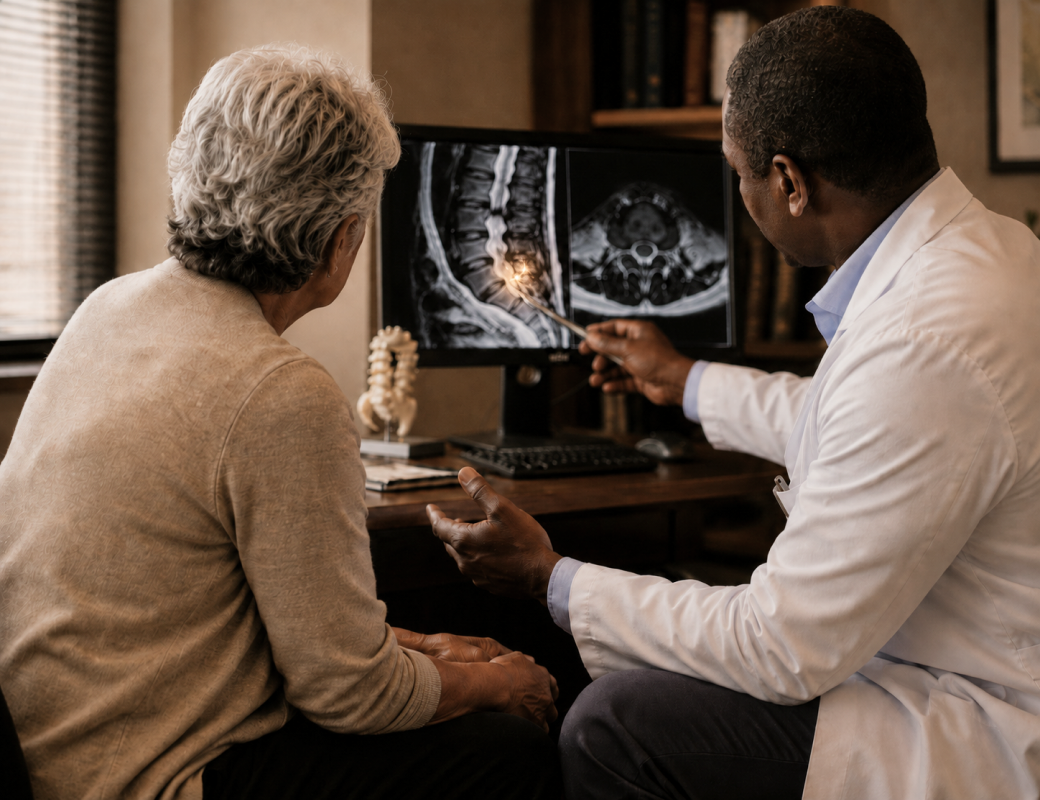
Lumbar spinal stenosis may cause aching, cramping, numbness, or weakness in the buttocks and legs. Symptoms often worsen with standing or walking and improve with sitting or leaning forward.
Numbness or tingling in the legs or feet
Pressure on the nerves can cause altered sensation that follows the path of the affected nerve.
Weakness, imbalance, or reduced walking tolerance
Some patients notice their walking distance shortening, or a sense of unsteadiness on uneven ground.
Symptoms that improve when sitting or leaning forward
Bending forward opens the spinal canal slightly, which often relieves pressure on the nerves.
Bowel or bladder changes or rapidly worsening weakness
These are uncommon but urgent. Seek medical attention promptly if they occur.

When narrowing begins to affect the nerves
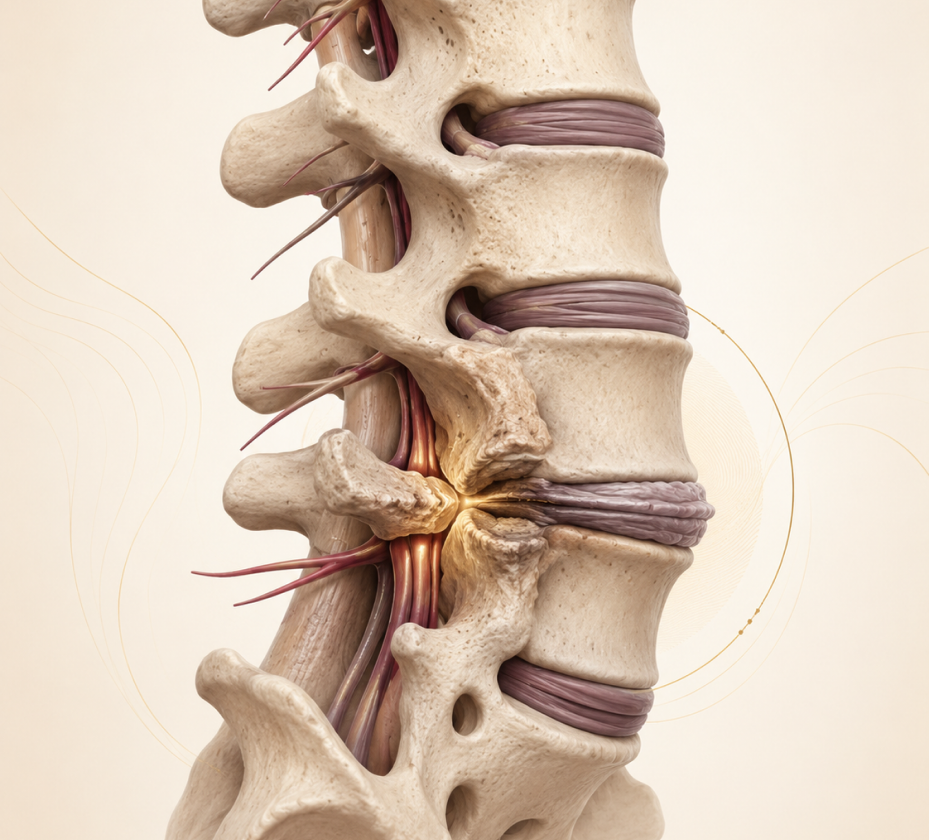
Central canal stenosis
Narrowing within the main spinal canal may place pressure on nerve roots or, in the neck, the spinal cord.
Foraminal stenosis
The openings where individual nerves exit the spine become smaller and may irritate a specific nerve.
Lateral recess stenosis
Narrowing along the pathway a nerve travels before leaving the spinal canal may contribute to radiating symptoms.
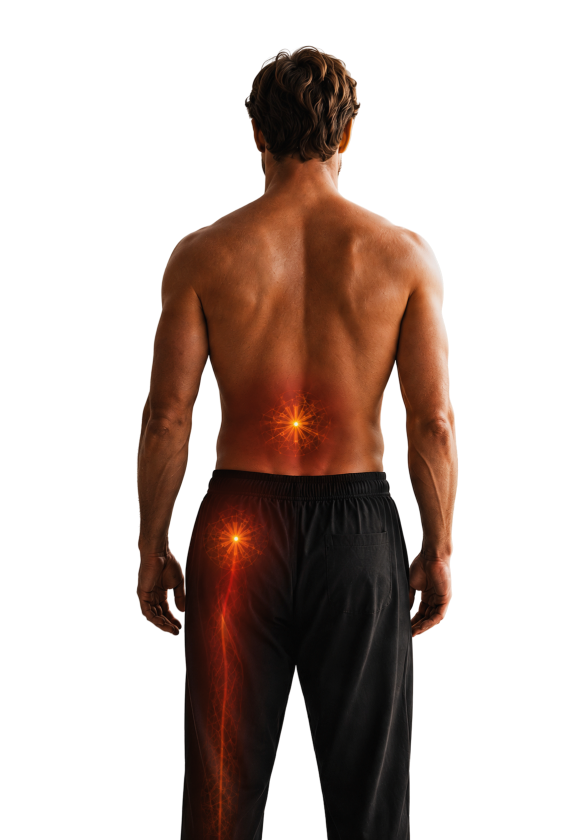
Spinal stenosis means that space around the spinal cord or nerve roots has become smaller. Imaging helps locate the narrowing, but symptoms and examination help determine whether it is clinically meaningful.
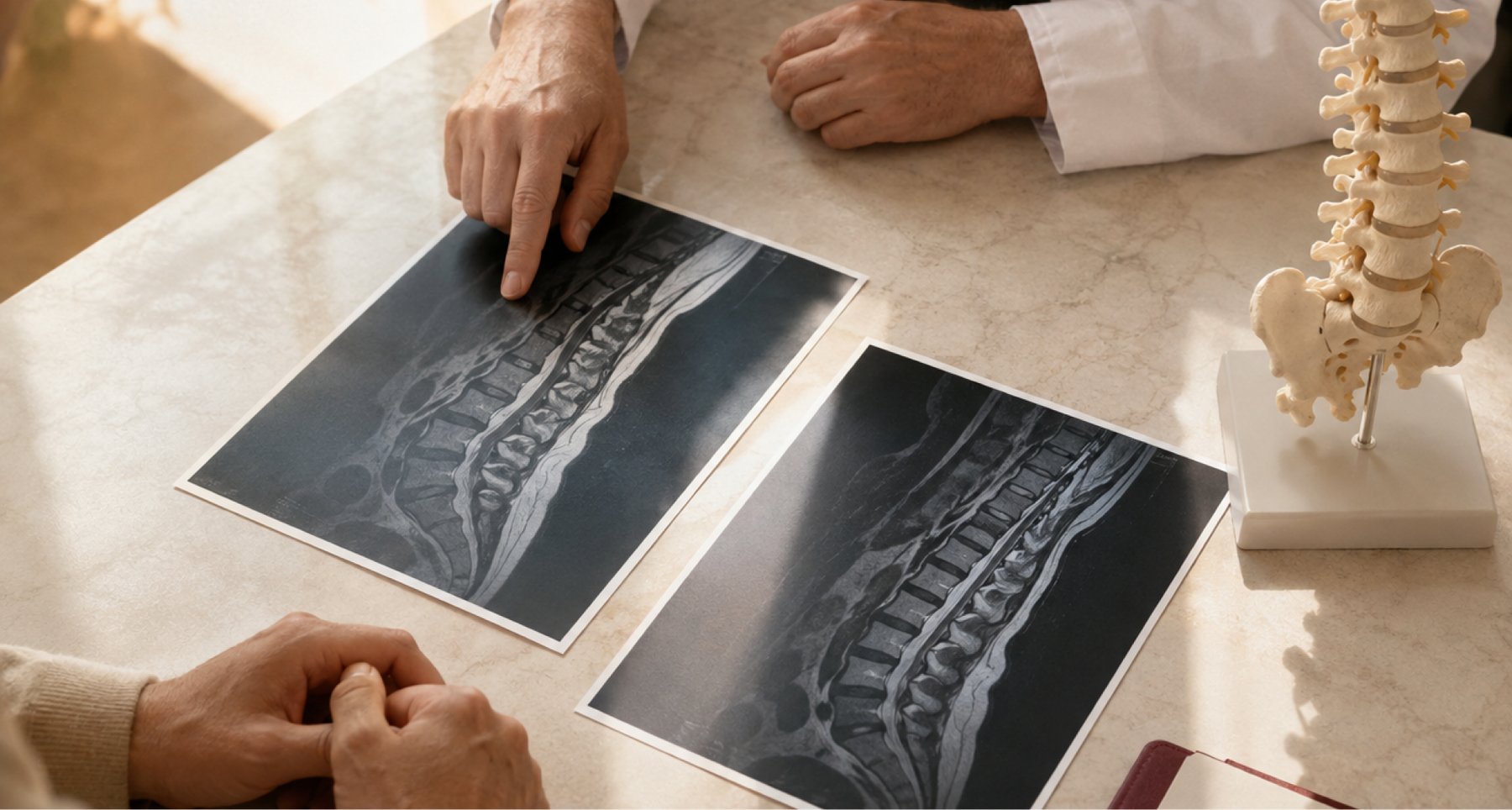
The MRI shows where the spine is narrow. The examination tells us whether that finding explains what you are experiencing.

Regaining the confidence to move without planning the day around pain.
Michelle's experience, from evaluation through recovery.
For the first time, I felt like someone was treating me, not just my MRI.
What can contribute to spinal stenosis
Spinal narrowing often develops gradually as several age-related changes occur together. The combination and location are different for each patient.
Age-related changes in discs and joints
Over time, discs may lose height, facet joints may enlarge, and surrounding ligaments may thicken. Together, these changes can reduce the space available for the nerves.
Arthritis and the formation of bone spurs
Degenerative arthritis can produce extra bone that encroaches on the space around the nerves.
Bulging discs that reduce space around the nerves
A disc that extends beyond its normal border can narrow the canal or the nerve exit.
Spondylolisthesis or other changes in spinal alignment
When one vertebra slips relative to another, the canal can narrow at that level.
A naturally smaller spinal canal
Some people are born with less space around the spinal cord, so smaller degenerative changes become symptomatic sooner.
Treatment depends on symptoms, function, and nerve pressure
Many people begin with nonsurgical care. When symptoms remain limiting or neurological changes progress, surgery may be considered to create more room for the affected nerves.
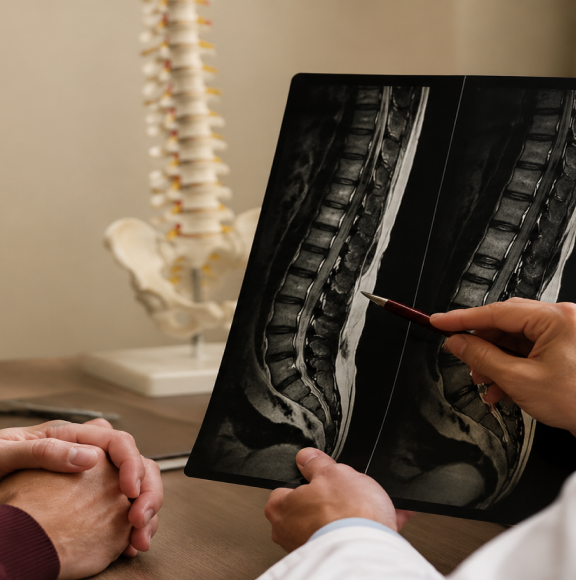

How spinal stenosis is evaluated and treated
A focused process connects your symptoms, examination, imaging, goals, and response to previous care.
Request an appointment
Tell us how pain, weakness, or reduced walking tolerance is affecting your daily life.
Complete a focused evaluation
Review your history, strength, sensation, balance, walking pattern, and available imaging.
Understand your options
Discuss whether monitoring, nonsurgical care, additional testing, or surgery is appropriate.
Move forward with a plan
Choose a next step based on your symptoms, neurological findings, goals, and overall health.
Experience evaluating complex spinal narrowing
Dr. Nkrumah combines neurosurgical expertise with careful neurological evaluation and clear explanations of both nonsurgical and surgical options for spinal stenosis.
I never felt rushed into a decision. I understood what the imaging showed and why the recommendation made sense.
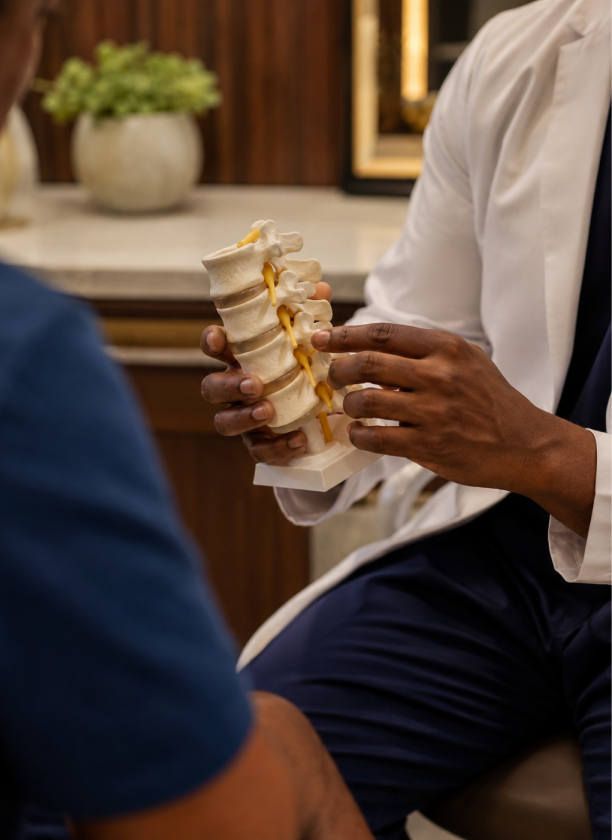

Related conditions and treatments
Explore symptoms, conditions, and treatment options connected to this page.
Common questions about spinal stenosis
Answers to common questions about symptoms, evaluation, treatment options, and when surgery may be considered.
Will I need surgery for my back or neck pain?
Not necessarily. Many patients improve with nonsurgical care. Surgery is considered when symptoms remain limiting or neurological findings progress.
What should I bring to my first appointment?
Please bring a photo ID, insurance information, a current medication list, and any available imaging or reports. If another physician referred you, their notes also help coordinate records before your visit.
Can I request a second opinion before deciding on treatment?
Yes. A second opinion is a normal part of making a confident decision, and we routinely review outside imaging and recommendations.
How quickly can I return to normal activity after treatment?
Recovery depends on the procedure and your overall health. Your plan will include what to expect week by week.
You deserve clear answers about your symptoms and options.
Request an appointment to talk through your symptoms, imaging, and treatment options with our team.